Products About us Industries FAQ News Contact Linkedin

Products

We stock the largest supply of degummed hemp fiber, which can be used as a stuffing material for hypo-allergenic persons, hemp wick vaping or anything else you can think of.

About company
stock

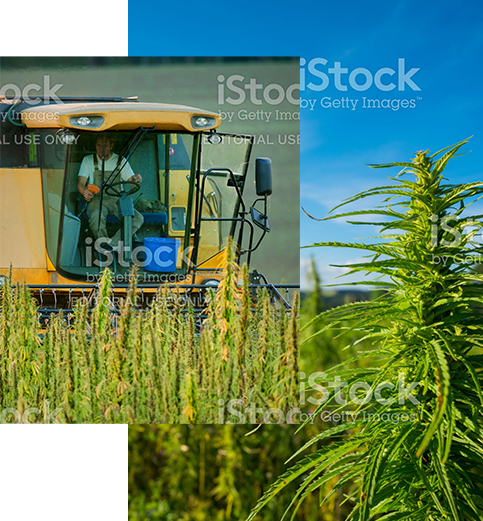
We are the company based in Lithuania – a country in the Central Europe – processing and supplying hemp raw material, and upholding the cultivation tradition of hemp.

For this purpose, we are in the process of building a modern hemp fiber processing plant, with the current investment amounting to more than 8 million euro. The hemp stalks will be processed at the plant to obtain fiber, while the residual materials (shives and pellets) will also be used in various branches of the industrial sector.

Our special feature is the top quality of hemp fiber used for production of higher added-value goods in the textile, nonwoven fabrics, paper, construction materials and composite materials sectors and for biofuel production.

Seeking to extract high quality hemp fiber, we have cultivated a new hemp variety. It enables to achieve a particularly high fiber content of the raw material amounting up to 35%. We strive towards increasing this indicator to 40%.

We provide the quality guarantee of our fiber because we are in control of the entire process: from selection of seeds, their preparation, growing and care to harvesting and processing.

 Our mission is to restore and stimulate the use of fiber hemp in various industrial branches as a sustainable, high quality and organic raw material, while promoting our local products around the world.

More

Industries using hemp fiber

The fiber is one of the most valuable parts of the hemp plant

Animal Bedding

Sed ut perspiciatis unde omnis iste natus error sit voluptatem  accusantium doloremque laudantium, totam rem aperiam, eaque ipsa quae ab  illo inventore veritatis et quasi architecto beatae vitae dicta sunt  explicabo. Nemo enim ipsam voluptatem quia voluptas sit aspernatur aut  odit aut fugit, sed quia consequuntur magni dolores eos qui ratione  voluptatem sequi nesciunt. Neque porro quisquam est, qui dolorem ipsum  quia dolor sit amet.Consectetur, adipisci velit, ullam corporis suscipit  laboriosam, nisi ut aliquid ex ea commodi consequatur? lit, ullam  corporis suscipit laboriosam, nisi ut aliquid ex ea commodi consequatur?

Materials
  • Lorem ipsum dolor
  • Lorem ipsum dolor
  • Lorem ipsum dolor
  • Lorem ipsum dolor
  • Lorem ipsum dolor
Paper

Русский текст

Gardening
Construction
Textiles

Frequently Asked Questions
/
Myths
About hemp: history
Is cultivation of fibre hemp in Lithuania restricted by law?
What is fibre hemp most commonly used for?
Ecology
What are the special cultivation conditions?
What is the processing procedure of raw material?
What are the advantages of the raw material?
Austa SK: the Lithuanian species of textile hemp
Why hemp growing is worth the trouble?
Why Natūralus Pluoštas?
All hemp contains narcotic substances, thus, its cultivation is illegal
The Lithuanian climate is not suitable for cultivations of fibre hemp
Hemp production is not in demand
Close
About hemp: history

Hemp is said to have been one of the first crops in Lithuania. The remains of hemp seeds and products that have been found go as far back as 3,000 BC. For many hemp was an important raw material as it allowed to produce a robust material that could be used in shipping and everyday activities. Historically, this agricultural plant is considered to be national heritage and an integral part of the farming culture, just like flax. Due to its excellent quality, the Lithuania hemp already today is greatly valued all around the world.

Close
All hemp contains narcotic substances, thus, its cultivation is illegal

This statement is not true. It is important to know the difference between industrial hemp used for textile production and marijuana, which contains plenty of psychotropic substance called tetrahydrocannabinol (THC). The plants cultivated from the certified fibre hemp seeds cannot be used in drug industry. Cultivation of this type of hemp in Lithuania and the European Union is legal, whereas, cultivation of fibre hemp has been legalised in Lithuania since 2014.

Close
The Lithuanian climate is not suitable for cultivations of fibre hemp

The climatic conditions in Lithuania are highly favourable for hemp grown for textile production. Moreover, the Lithuanian hemp species Austa SK has been developed by Natūralus Pluoštas UAB in order to adapt it to the country’s climatic conditions.

Close
Hemp production is not in demand

The hemp production is currently experiencing a boom. Use of hemp in textile industry is gaining popularity.

Close
Is cultivation of fibre hemp in Lithuania restricted by law?

Cultivation of fibre hemp in Lithuania is regulated by the national and EU legal acts. These acts permit sowing and cultivation of only certified fibre hemp in Lithuania, thus, the farmers wishing to grow hemp must purchase certified seeds. This possibility is granted by Natūralus Pluoštas UAB, which supplies Austa SK seeds, the Lithuanian certified species of textile hemp.

Close
What is fibre hemp most commonly used for?

Hemp grown for fibre is widely used for production of textile, timber and paper, and in construction material, biofuel and in food industry. The application of hemp in the textile industry has been gaining popularity, where raw hemp fibre is highly on demand.

Close
Ecology

Fibre hemp is considered to be a sustainable and environmentally-friendly agricultural crop, which allows efficient use of soil and environment, and which due its weeds overpowering properties is particularly suitable for use in crop rotation. This crop is highly attractive for organic farms and may be recognised as a plant suitable for green farming.

Close
What are the special cultivation conditions?

Fibre hemp has modest requirements as to the soil and is highly resistant to pests and diseases. Its cultivation does not require use of herbicides, fungicides, insecticides, while the fertilisation rates are very low. This plant does not demand any special care and attention, has really short vegetation period and can be planted densely. In addition, fibre hemp has a high yield.

Close
What is the processing procedure of raw material?

The fibre hemp grown for industrial purposes is certified and contains hardly any of the narcotic substance tetrahydrocannabinol (THC), which is characteristic of other types of hemp. The hemp fibre is extracted from a dried stalk, which has undergone special processing. Application of specialised technologies allows to separate the hurds from the dry stalk of hemp plant and extract the valuable fibre.

Close
What are the advantages of the raw material?

This is a natural and strong fibre characterised by a long lifespan. The textile manufactured from hemp fibre is highly absorbent and provides an excellent UV-light protection. Hemp cultivation practically excludes use of chemicals, therefore, it is treated as organic raw material. The products produced from hemp can be easily processed.

Close
Austa SK: the Lithuanian species of textile hemp

The experienced Lithuanian breeders, inspired by the deeply rooted tradition of hemp cultivation in our country, have developed a new hemp species – Austa SK. This species has been granted legal protection and registered on the list of plant species protected in the Republic of Lithuania. Austa SK has been adapted to the Lithuanian climatic conditions and enables a significant yield of hemp – at least 35% of the dry mass of plant stalks.

The content of tetrahydrocannabinol (THC) in the Lithuanian Austa SK species of hemp amounts to a mere 0.001%, therefore, it fully conforms to the requirements applicable to fibre hemp in the Republic of Lithuania and the European Union.

This species has been adapted to the dominant climate of the Baltic States.

Close
Why hemp growing is worth the trouble?

Hemp grown for textile purposes is an attractive rotation crop. It is able to overpower the weeds and helps restore degraded soil prior to its preparation for the future sowing.

The textile hemp does not require a lot of attention and constant care or considerable investments. This crop is resistant to pests and diseases and highly adaptive to various climatic conditions.

Hemp has a short vegetation period and a high yield. Growing of the recommended hemp species in accordance with the cultivation technology can yield 12-14 tons of raw materials ready for processing from 1 ha of land.

Natūralus Pluoštas UAB supplies Austa SK hemp seeds, the certified Lithuanian hemp species, buys the harvested hemp plants and ensures continuous demand in primary raw material.

Close
Why Natūralus Pluoštas?

The company plant is located in a geographically convenient area – Lithuania, in the Centre of Europe. It is the only producer of hemp in the Baltics, which guarantees the full cultivation and processing cycle from seed harvesting to supply of raw materials.

The company’s R&D centre has been operating since 2014 and is preparing and supplying the seeds of Austa SK, the top quality certified Lithuanian hemp species.

The special feature of the plant Natūralus Pluoštas is building will be the no-waste production. Hemp grown on the Lithuanian organic farms will be processed to obtain the technological fibre, while the residual materials (hurds and small fibre particles) will also be used in various branches of agricultural and industrial sector.

It is expected to process about 14,000 tons of produce annually.

Close
Your message was sent!
Close
Close
Close
Close